Industrial focus
Built around the reality of engineered-to-order work.
Project-specific designs, physical components, changing revisions, procurement dependencies and quality records create a context problem that generic tools rarely solve.
Pressure Vessels
Component, drawing, material and inspection context across the project lifecycle.
Tanks
Trace progress from engineered assemblies through fabrication and testing.
Skid Packages
Connect multi-discipline equipment, procurement and documentation.
Process Equipment
Keep complex project decisions and status accessible across roles.
Modular Systems
Understand relationships across modules, assemblies and field delivery.
Specialty Fabrication
Preserve the project story when every job is different.
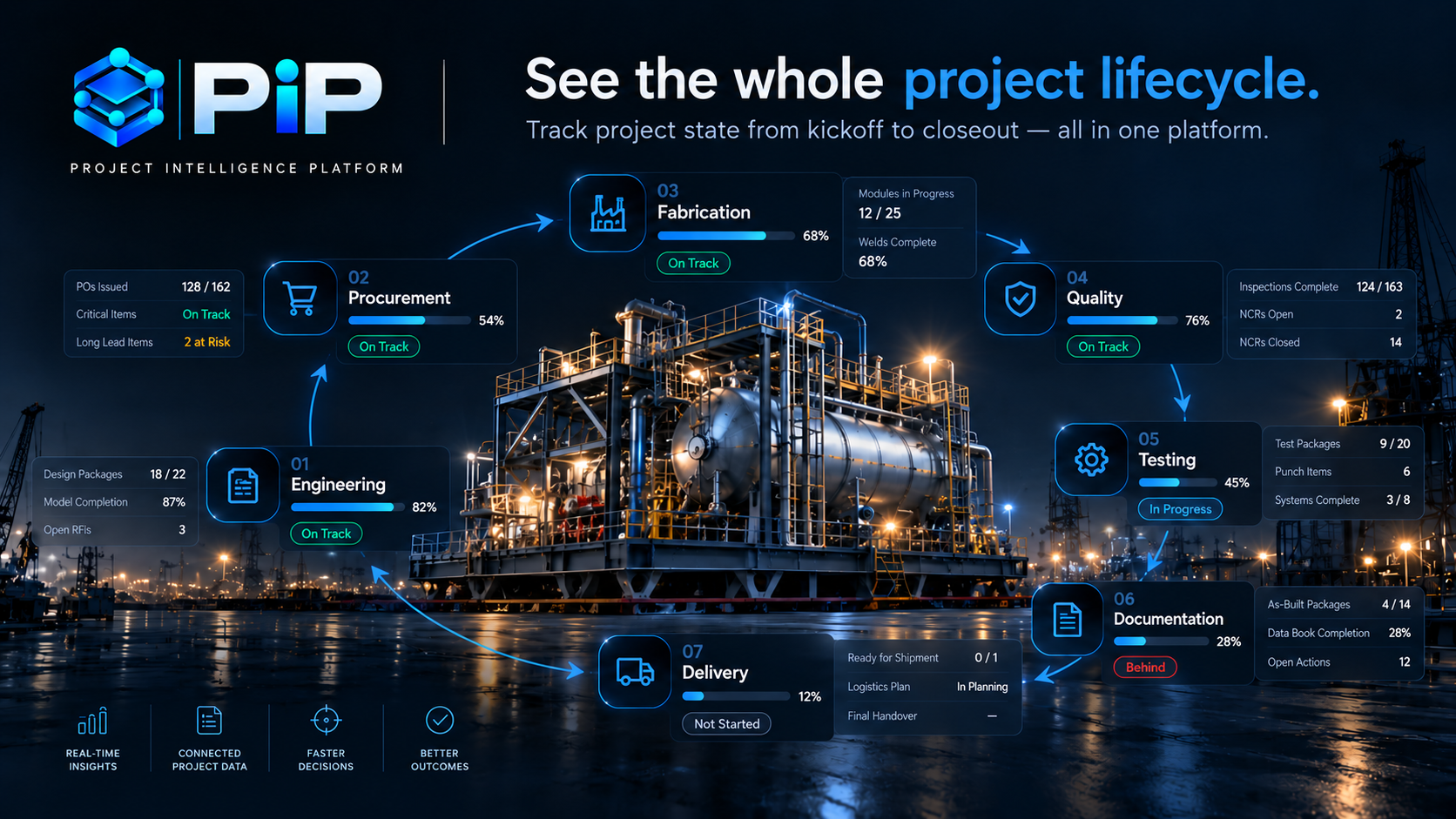
A familiar lifecycle
From customer need to project closeout.
The exact lifecycle can be configured to reflect each company and project.
Why this environment fits PIP
A project has more context than any one system can hold.
Many disciplines
Engineering, procurement, fabrication, quality and project controls all contribute to the same delivery outcome.
Changing revisions
Design changes need to remain connected to the materials, work and decisions they affect.
Physical assemblies
Equipment, assemblies and components require a project structure that reflects how they are actually built.
Quality events
Inspections, holds and non-conformances must stay traceable to the right project items and history.
Procurement dependencies
Supplier commitments and material readiness directly influence fabrication priorities and schedule confidence.
Shop-floor progress
Current production status needs to reach project teams without losing its operational context.
Deep project history
Teams need to understand not only the current state, but also the sequence of events that produced it.
Reusable lessons
Completed-project knowledge should strengthen estimates, planning and execution on the work that follows.
PIP is currently in Beta and is being developed and validated for these environments; this page does not imply active deployments in every industry shown.